 Discord
Content and availability
- Request
- Rules and approval
- Automation
- Download
- Library
- Availability
- Notification
PlexSub does not download or host content itself. It preserves context and reflects status returned by connected services.

PRODUCT
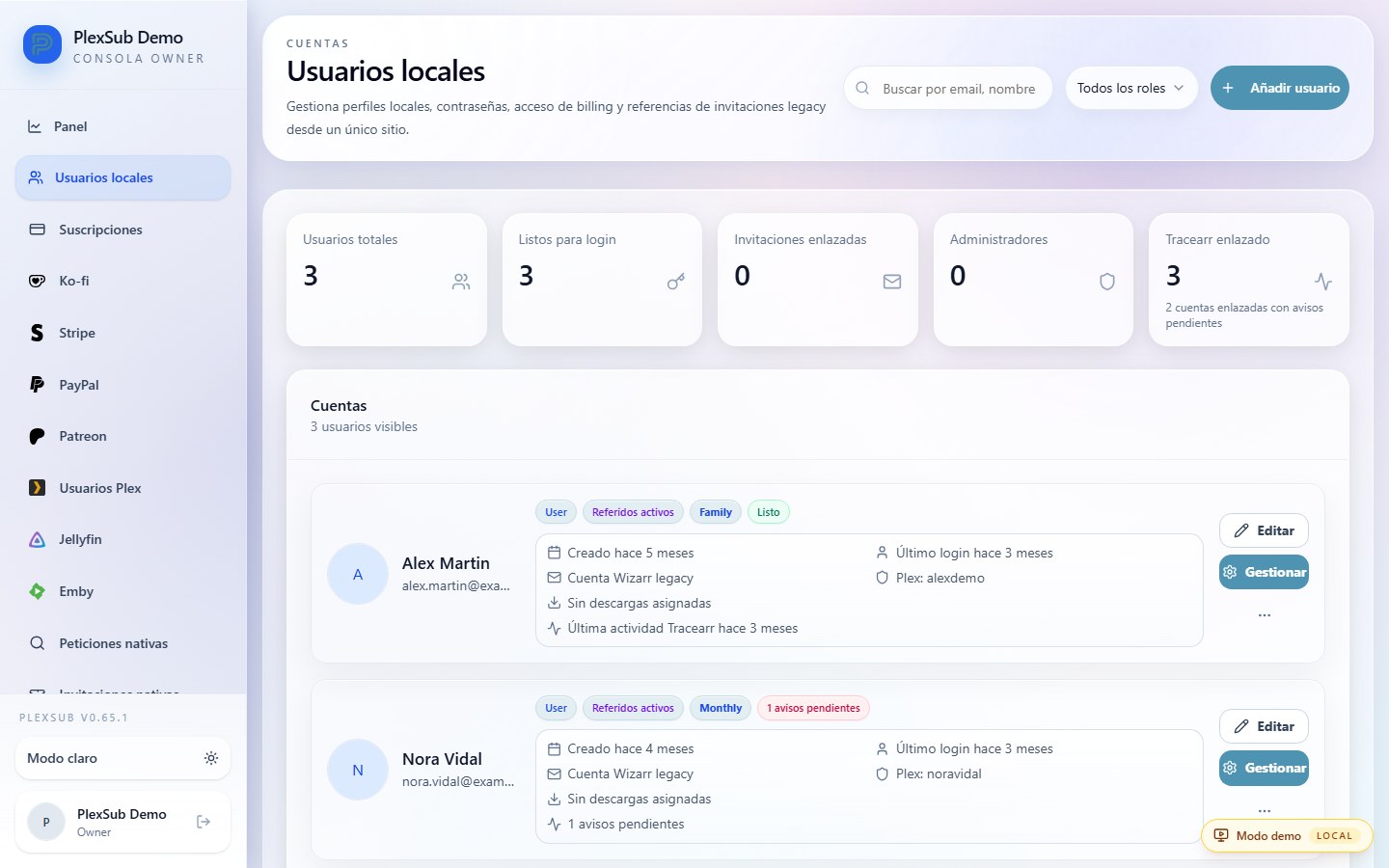
PlexSub connects the context of each member, service and request so you can move from a signal to an action without rebuilding the story manually.
HOW IT IS ORGANISED
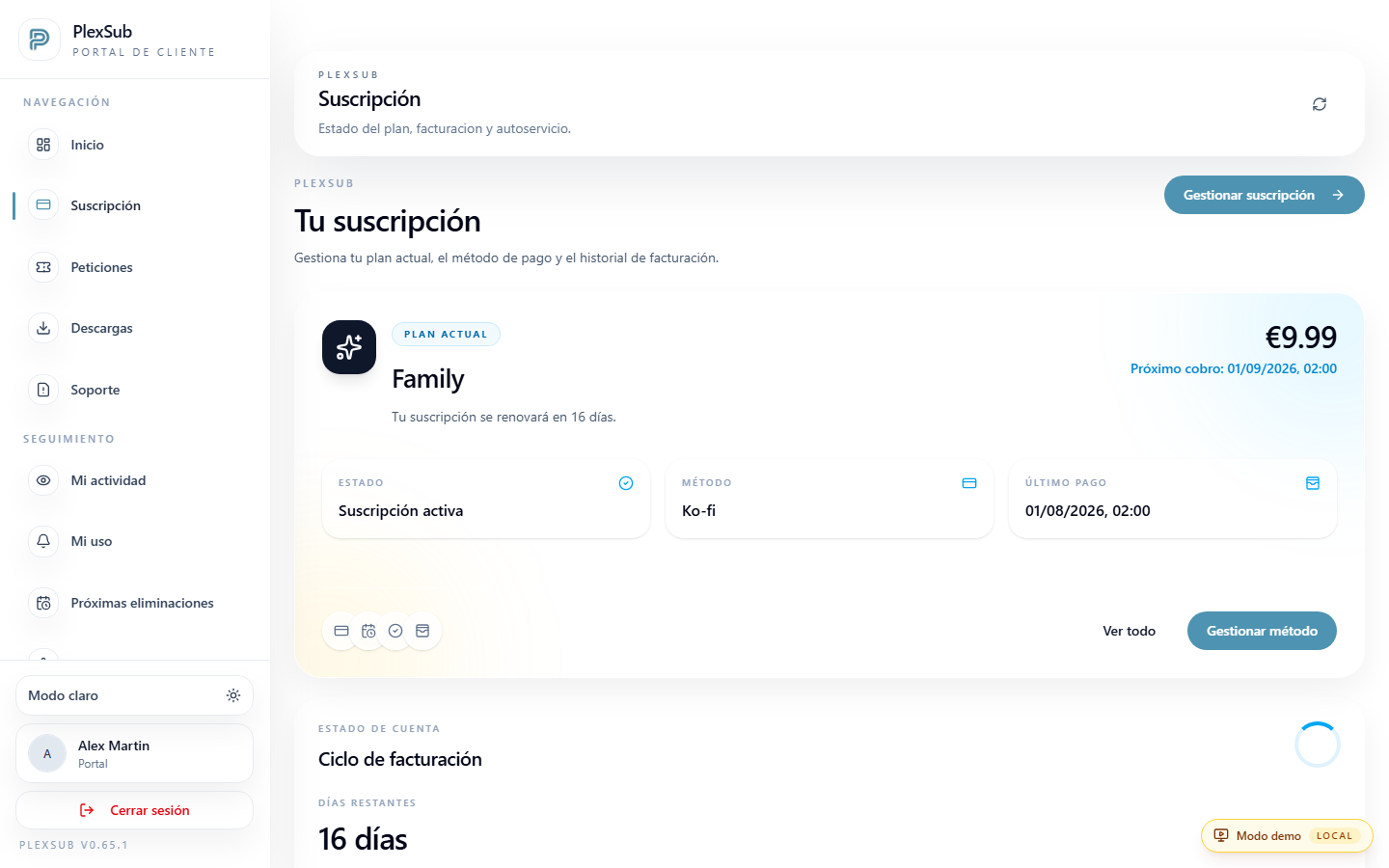
Administration and the member portal share the same operational context.
Users, subscriptions, requests and notices make current state visible.
The experience adapts to the native modules and providers you enable.
Data, tasks, cache and backups remain under the operator's control.
CLEAR BOUNDARIES
PlexSub organises identity, rules, native invitations, visible status, permissions and each member journey.
Connected services perform playback, automation, downloads, payments, metrics or notifications according to their configuration.
REAL JOURNEYS
PlexSub does not download or host content itself. It preserves context and reflects status returned by connected services.
Native invitations belong to PlexSub; providers participate only when configured. The portal exposes the capabilities relevant to each member.
OPERATIONS
The deployment keeps its own data and processes. Tasks synchronise or review state, cache avoids repeated work and backups support recovery planning. The operator decides how these components are hosted, updated and monitored.